 پارسی
پارسی
Mehdi Bebarnejad
Mehdi Bebarnejad (August 15, 2000 – September 21, 2022)
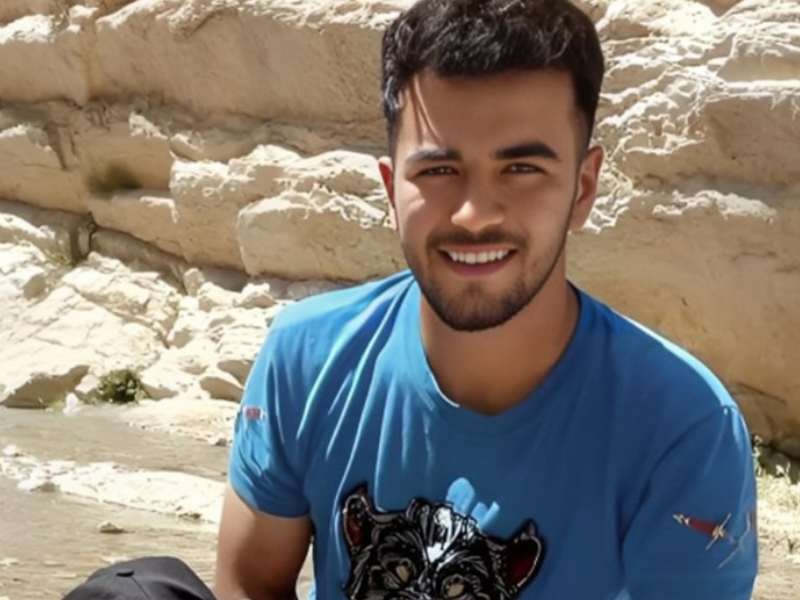
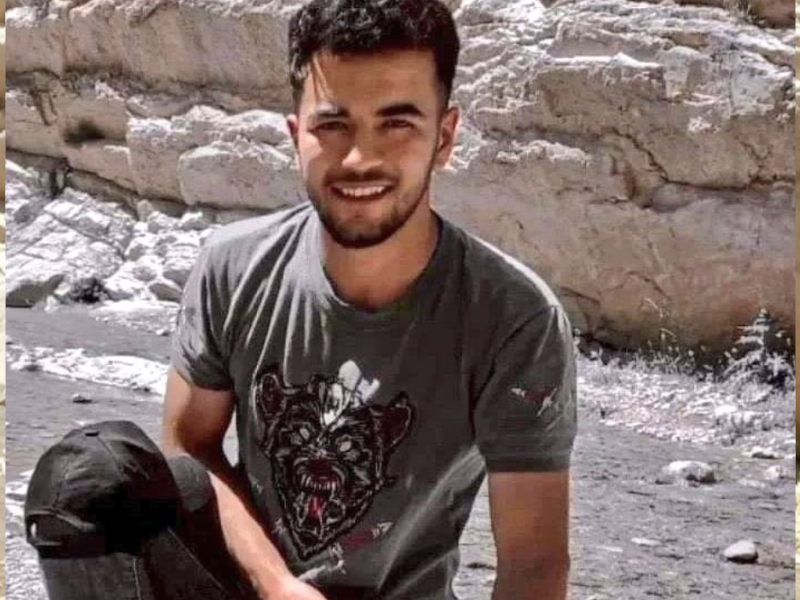
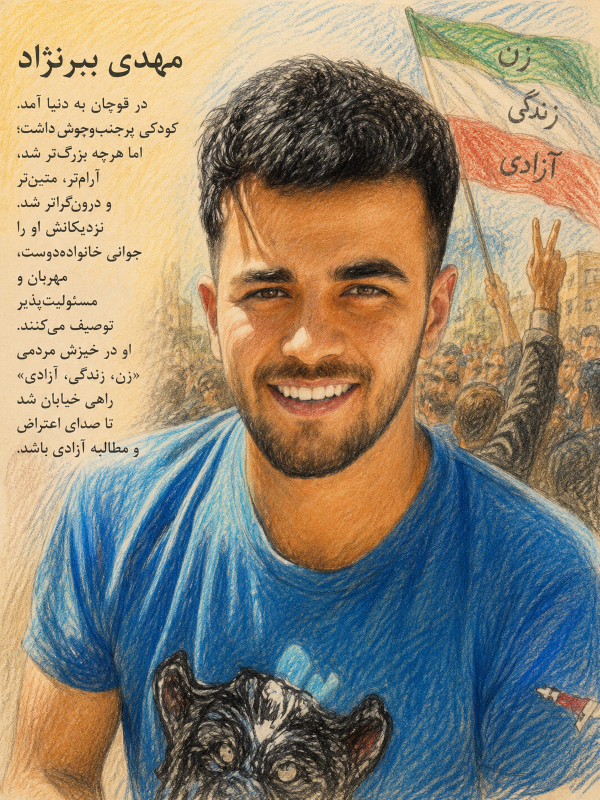
Mehdi Bebarnejad was born on August 15, 2000, in Quchan. He was an energetic child, but as he grew older, he became calmer, more composed, and more introverted. Those close to him describe him as a kind, family-oriented, and responsible young man. After losing his father, he developed a deep emotional bond with his mother and remained devoted to his family.
From an early age, he was passionate about sports and pursued wrestling seriously. In later years, bodybuilding became a regular part of his daily life. To help support his family, he worked at different times in a car wash, a reception hall, and as a laborer. He was also interested in rap music and followed the work of the rapper known as "Pootek."
After completing his mandatory military service, Mehdi decided to build a new future for himself. He took Iran's national university entrance examination and was accepted into university. A promising future lay ahead of him—a future that was meant to begin with university life, but one that he never had the chance to realize.
On his personal Instagram page, he had posted only one sentence—a brief statement that later took on a painful and lasting meaning for many who read it:
"We are in suffering, and to exist is to suffer."
In September 2022, as protests spread across Iran following the death of Mahsa Amini, tensions escalated in many cities, including Quchan. According to people close to the family, several protesters had already been killed and many others injured on the night of September 20.
On the evening of September 21, 2022, at the age of 22, Mehdi Bebarnejad was among the protesters. According to a source close to his family, he remained in the streets until the very last moments and was struck by gunfire at around 9:00 p.m.
According to the same source, his friends first took him by motorcycle to a clinic, but they were unable to obtain medical treatment. They then transported him by car to a hospital emergency department. His friends say that Mehdi was still alive when he arrived at the hospital.
According to sources close to the family, when doctors attempted to transfer him to the operating room, security officers prevented them from doing so. These sources further claim that a verbal confrontation occurred between the doctors and the officers over transferring Mehdi for surgery. Ultimately, he never received the operation and lost his life. This account has not been confirmed by official authorities.
The following morning, Mehdi's family learned that he had been wounded through a phone call from the hospital, by which time it was already too late to save him.
His death certificate lists the cause of death as "a gunshot wound to the left side of the pelvis and internal bleeding." However, according to published reports, his body was not immediately released to the family and was instead transferred to the Forensic Medicine Organization in Mashhad.
The family spent three days trying to recover their son's body. According to sources close to them, family members were required to sign a written commitment that the funeral would be held quietly and that no public gathering would take place before the body was released.
Mehdi was eventually laid to rest in his ancestral village. Only a small number of relatives attended the funeral. According to those close to the family, many friends and acquaintances were prevented from attending, and even placing his photograph on vehicles or at his gravesite reportedly met with opposition from security officers.
The same sources say that security pressure on the family continued after the burial. They describe a heavy security presence during the fortieth-day memorial ceremony, restrictions on the family's movements, the confiscation of Mehdi's mobile phone for several months, and what the family described as being kept under surveillance by security forces. These claims have also not been confirmed by official sources.
Mehdi's death left a deep wound on his family. Those close to them say that his mother never regained the peace she once had and that the grief of losing her son never left her. They remember Mehdi as a calm, courageous, and fearless young man who remained in the streets until the final moments of the protest.
Had fate unfolded differently that night, Mehdi Bebarnejad might have spent the past several years pursuing his university education and building a different future for himself. Instead, his life was cut short at the age of 22. His dreams were extinguished before they had the chance to flourish, and his name became intertwined in the memory of many Iranians with the turbulent days of September 2022.