 پارسی
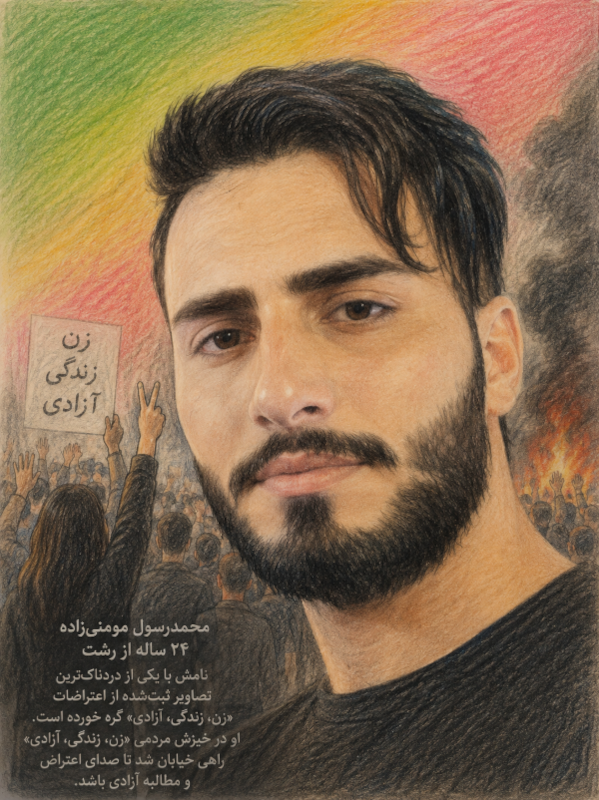
Mohammadrasoul Momenizadeh
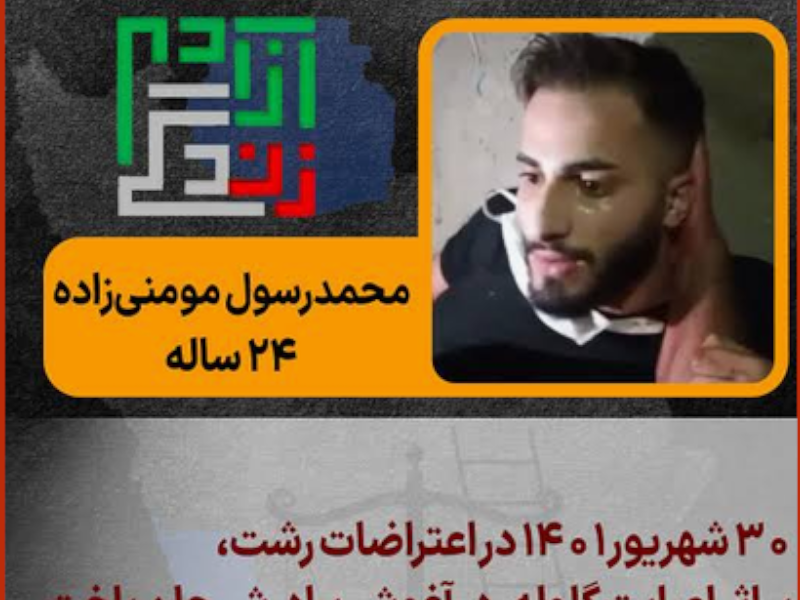
Mohammadrasoul Momenizadeh (November 14, 1997 – September 21, 2022)
November 14 is the birthday of Mohammadrasoul Momenizadeh, a 24-year-old young man from Rasht whose name became inseparably linked to one of the most painful images recorded during the “Woman, Life, Freedom” protests: an image of a young man holding his brother in his arms, staring in shock into his eyes, as if desperately trying to keep him from closing his eyes forever.
Mohammadrasoul was taking part in the protests in Rasht alongside his brother, Amir. On September 21, 2022, a day that would become a dividing line in his family’s life, everything changed.
According to accounts by Mohammadrasoul’s brother and reports published about that day, security forces shot him from a very close distance. The bullet struck Mohammadrasoul from behind. He was severely wounded and bleeding heavily, but the shooting did not end the violence.
According to his brother, after Mohammadrasoul was shot, more than thirty motorcycle-riding security personnel attacked him with batons. Seeing his brother wounded and covered in blood, Amir threw himself over Mohammadrasoul’s body, trying to protect him from further blows.
He later described those moments:
“When they shot him from behind, more than 30 motorcyclists attacked him with batons. I threw myself over Mohammadrasoul so that his broken and bullet-wounded side, which was covered in blood, would not be kicked.”
Mohammadrasoul died in his brother’s arms.
The photograph captured from that moment became more than an image of a young man’s death. It was the image of a brother watching his loved one slip away before his eyes, his face frozen between disbelief and terror. His gaze seemed suspended between hope and reality, between the desperate wish that Mohammadrasoul would remain alive and the unbearable truth that he was dying.
He was 24 years old.
The Hospital: The Beginning of Another Pain
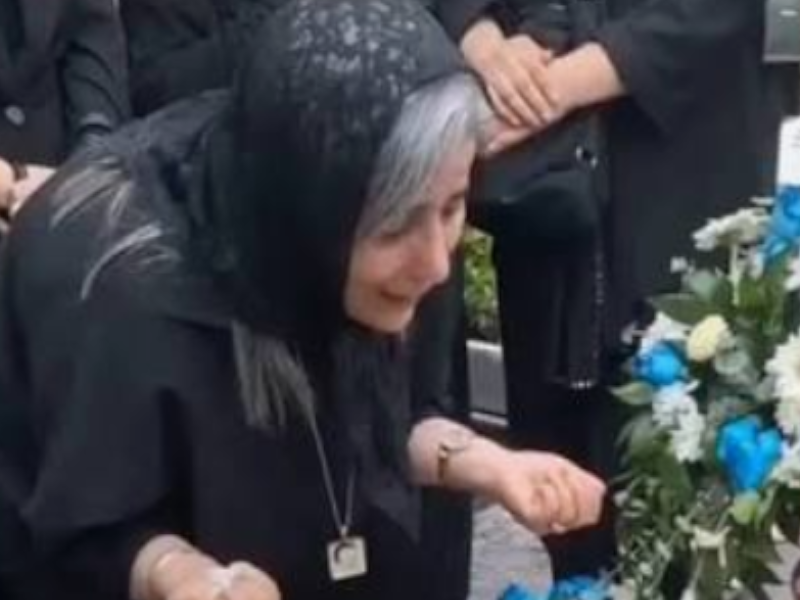
For the Momenizadeh family, however, Mohammadrasoul’s death was not the end of that terrible day. His mother, Zahra Karimi, described the hospital as the beginning of another ordeal—hours of confusion, fear, and grief during which she says she was not even allowed to properly see her son’s body.
Zahra Karimi recalled:
“When I went to the hospital, it was full of plainclothes officers. When I saw someone’s body there, I said, ‘May God have mercy on his parents.’ My other son told me that it was Mohammadrasoul. I could not accept it.”
She could not bring herself to believe that the body before her was her own son’s. Perhaps the human mind, confronted with such devastating news, instinctively rejects reality for a few moments. Perhaps even amid the chaos, a mother continues to hope for some small miracle.
But according to her account, security forces did not allow her to see her son as a mother should be able to see him.
“The security forces did not let me see my child’s body. They kept dragging me around the hospital, the courtyard, and the street.”
For a mother who has lost her child, a final look, a final touch, and a final kiss can become part of the farewell. Yet Zahra Karimi says that even this final act of motherhood was denied to her.
She asked:
“Why did you shoot my child with a gun from one meter away? What had he done? What am I supposed to do so that his blood is not forgotten? I was not even allowed to see or kiss my own child.”
Those questions later became inseparable from her public calls for justice. For her, they were not simply the questions of a grieving mother; they became the beginning of a struggle to seek accountability.
The Forensic Report
After Mohammadrasoul’s death, the family’s account of his injuries and the trajectory of the bullet also became a source of dispute and unanswered questions.
Mohammadrasoul’s brother wrote on his social media account, referring to the forensic report, that the report stated that Mohammadrasoul had suffered an injury to his liver. According to his brother, however, the bullet had entered from beneath his armpit, and an injury had been observed around the lower ribs when the body was examined in the morgue.
The discrepancy in the descriptions of his injuries added to the family’s grief and uncertainty—a family that, from the very first hours, was forced to confront not only the death of their son and brother but also questions surrounding how he had been killed.
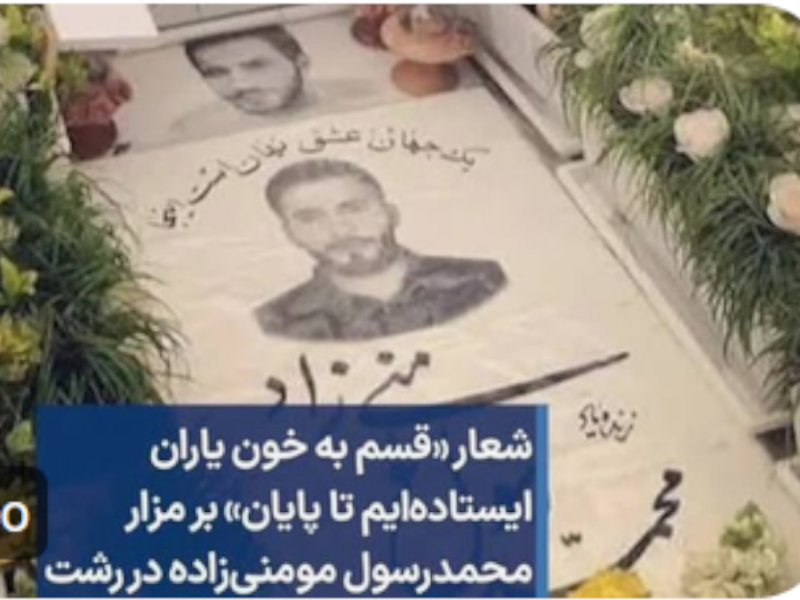
The Funeral
After Mohammadrasoul’s death, pressure on the family reportedly continued. According to accounts published about the funeral, large numbers of plainclothes security personnel were present, filming the ceremony and placing the Momenizadeh family under pressure and threat.
But those pressures did not silence his mother.
Zahra Karimi repeatedly insisted on her right to seek justice. She said:
“I will seek justice, and I will not allow my son’s blood to be forgotten.”
Those words gradually became one of the clearest expressions of her determination—a mother who had lost her child but refused to allow his death to disappear into silence.
For Zahra Karimi, Mohammadrasoul was not merely a name among those killed during the protests. He was her son: a young man who had been born, grown up, laughed, lived alongside his family, and ultimately, at the age of 24, died in his brother’s arms.
A Birthday Remembered
November 14 is Mohammadrasoul Momenizadeh’s birthday.
A day that might once have reminded his family of childhood, youth, and the joyful memories of a son is now forever tied to the memory of a young man whose life ended at the age of 24 during the protests in Rasht.
Yet Mohammadrasoul’s name remains preserved in the image that captured the final moments of his life: a brother holding him in his arms, eyes widened in shock and disbelief, and a wounded body no longer capable of continuing the struggle to live.
Perhaps what is most powerful in that image is not death itself, but the bond between two brothers—a bond that remained unbroken even in the final moments. Amir, Mohammadrasoul’s brother, made his own body a shield over him, trying to protect him from further blows until the very end.
Mohammadrasoul was gone, but his story remained in that embrace: in his brother’s eyes, in his mother’s voice, and in the question that has continued to echo long afterward:
Why was he killed?
And how can the blood of a human being simply be forgotten?
For the Momenizadeh family, the pursuit of justice began there—with the loss of a 24-year-old son and a mother who refused to let his blood be forgotten.
Mohammadrasoul Momenizadeh’s name has become part of the stories of those who lost their lives during the “Woman, Life, Freedom” protests, forever associated with the image of an embrace: a brother holding his brother in the final moments of his life.
And perhaps the most enduring part of his story is not only the moment of Mohammadrasoul’s death, but his family’s determination to preserve the truth of what happened—to ensure that his name, his life, and what was done to him would not disappear into the passage of time.