 پارسی
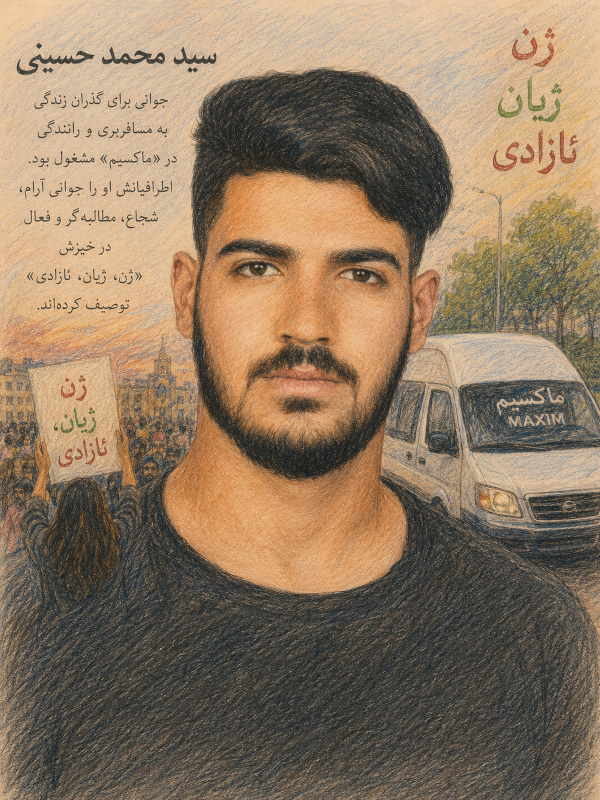
Seyed Mohammad Hosseini
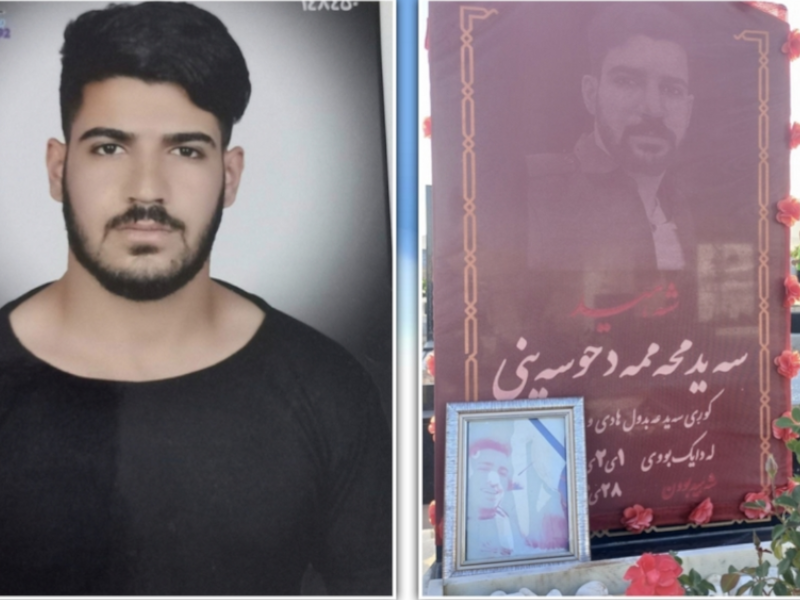
Seyed Mohammad Hosseini (May 1, 2000 – October 20, 2022)
On the eve of the first anniversary of Iran’s nationwide protests in 2022, many stories of the victims still remain untold — names buried in silence and families denied even the right to publicly mourn their loved ones. Among them is the story of Seyed Mohammad Hosseini from Saqqez, one of the most tragic and least-heard cases: a young man who was killed, whose death was concealed, and whose mother later died under the weight of grief and intimidation.
Seyed Mohammad Hosseini, the son of Seyed Hadi Hosseini and Maliheh Hassannejad, was born on May 1, 2000, in Saqqez. He lived with his family in the Shahrek-e Daneshgah neighborhood and worked as a driver for the ride-hailing service Maxim to support his family. Friends and relatives described him as calm, courageous, outspoken, and deeply involved in the “Jin, Jiyan, Azadi” (“Woman, Life, Freedom”) uprising. Like many young Iranians, he openly expressed anger over inequality, repression, and the hardships that shaped his life.
After the nationwide protests erupted following the killing of Mahsa Jina Amini, Mohammad became active in demonstrations in Saqqez. According to informed sources and later investigations, security forces identified him as a participant and devised a plan to eliminate him. Late on the night of October 20, 2022, around midnight, Mohammad received a phone call offering him a highly paid intercity passenger trip — a believable offer for a working-class driver trying to earn a living. He left home that night without knowing it would be the last time his family would see him alive.
In the Qoukh area of Saqqez, security and repression forces reportedly ambushed him. According to accounts from sources close to the case, Mohammad was brutally beaten from behind with batons and then killed through the injection of an air embolism. His body was placed back inside his car, and the next day authorities informed the family of his death — falsely claiming that he had committed suicide.
His body was transferred to the hospital and the medical examiner’s office, yet no official documents or medical reports were ever given to the family. Every attempt to learn the truth was met with silence, intimidation, and threats. Security agents warned the family that if they spoke publicly about Mohammad’s killing, his body would not be released. The threats escalated further: authorities allegedly warned that the family’s other son would be “disappeared” and that “all the young men of the tribe would be ruined.”
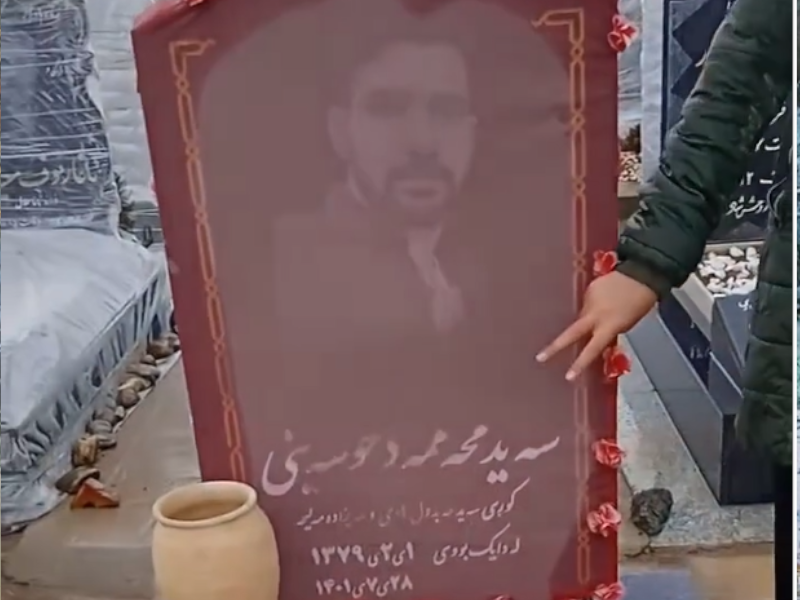
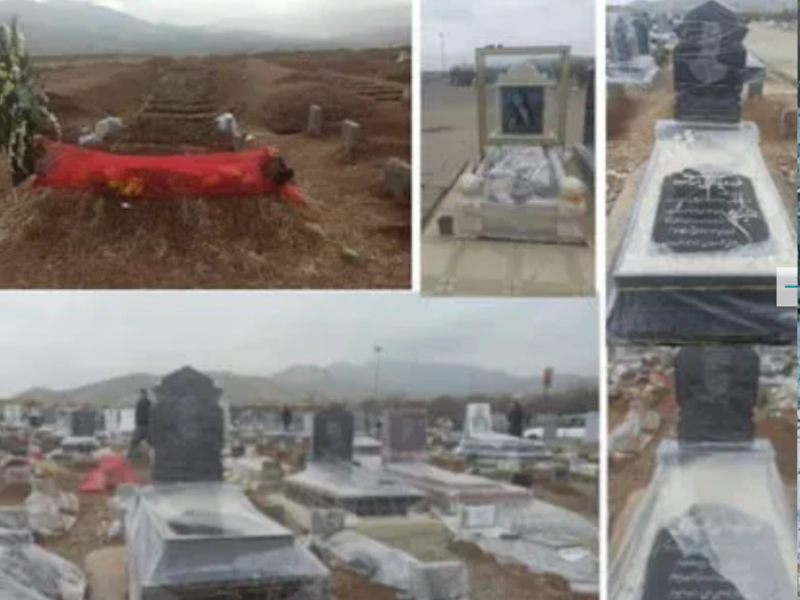
Under immense pressure, the family was forced to repeat the government’s narrative and publicly describe Mohammad’s death as suicide. His body was buried under strict security control, late at night, in the Aychi cemetery of Saqqez. There was no public funeral, no free mourning, and no opportunity for the truth to be spoken.
But the family’s suffering did not end there.
Maliheh Hassannejad, Mohammad’s mother, came under severe psychological and security pressure immediately after the burial. She had not only lost her son; she was also forced into silence and compelled to accept a false version of his death. The combination of grief, fear, and relentless intimidation destroyed her physically and emotionally. Soon afterward, she suffered a stroke and fell into a coma.
After nearly seven months hospitalized in critical condition, Maliheh Hassannejad died on July 9, 2023, at Rajaei Hospital in Tehran.
Only after her death did details surrounding Mohammad’s killing gradually become public. The silence imposed on the family through threats and fear finally broke, and human rights organizations and independent media began reporting on what had happened. It became clear that the family had been subjected to months of intimidation aimed not only at silencing them, but also at preventing any legal pursuit of justice.
Confusion surrounding the case was intensified because another protester from Saqqez — also named Seyed Mohammad Hosseini — had been killed during the protests. The similarity in names caused this case to remain hidden in obscurity for months.
Today, the names of Seyed Mohammad Hosseini and his mother, Maliheh Hassannejad, stand alongside the many victims from Saqqez — from Mahsa Jina Amini to Danial Pabandi, Fereydoun Faraji, Fereydoun Mahmoudzadeh, and others buried in Aychi cemetery.
Mohammad Hosseini’s story is not only the story of a protester killed by state violence. It is also the story of a family stripped of truth, mourning, and justice — a family that lost a son to violence and then lost a mother to the unbearable burden of grief and fear. It reflects the hidden suffering endured by countless families of Iran’s protest victims, many of whose names and stories still remain buried in silence.