 پارسی
پارسی
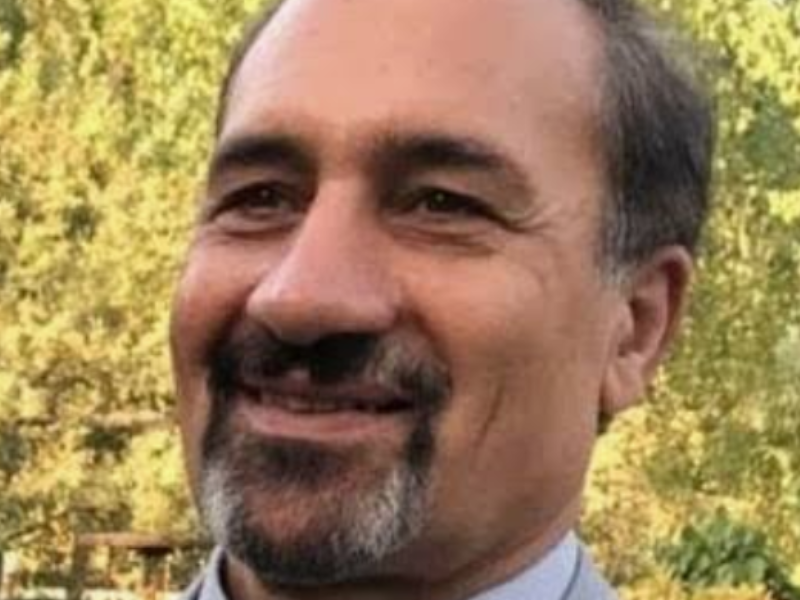
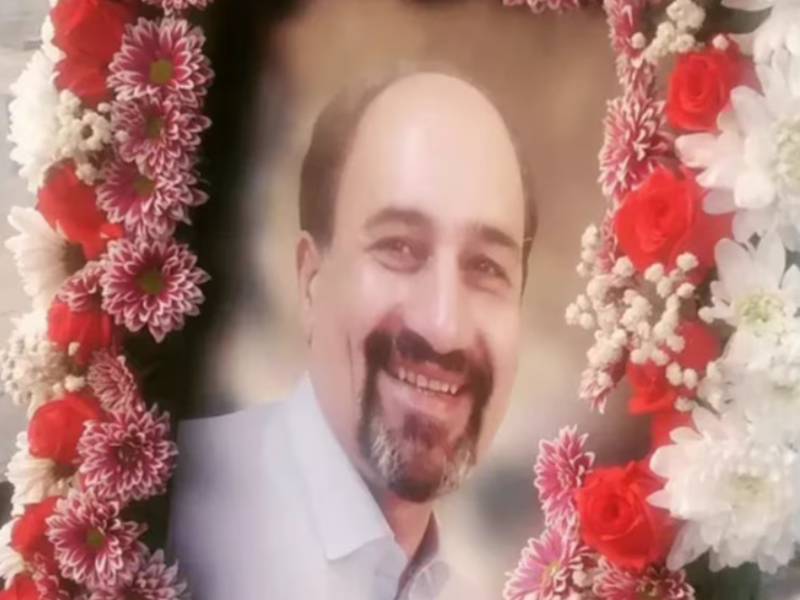
Mohammad Jameh-Bozorg
Mohammad Jameh-Bozorg (March 23, 1963 – September 24, 2022)
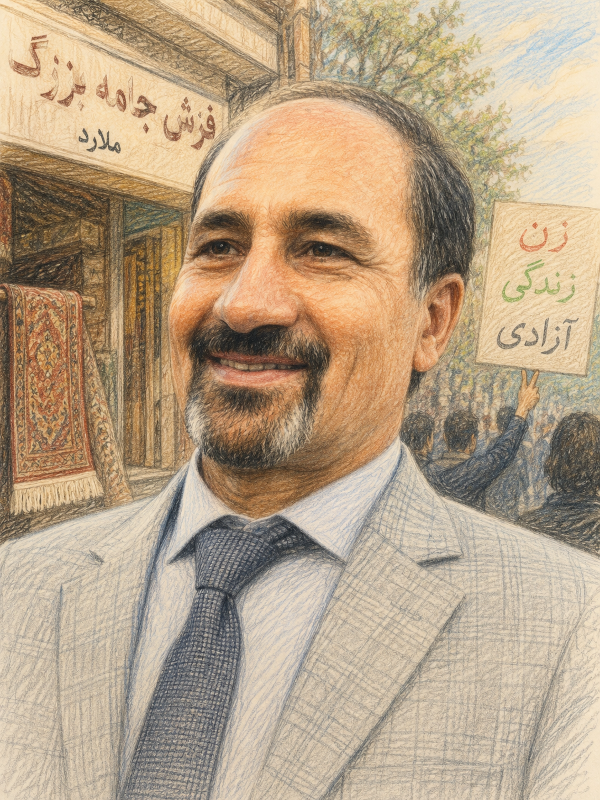
Mohammad Jameh-Bozorg was born on March 23, 1963. He spent his life in Malard, where he ran a carpet shop and built an ordinary life around his work and his family. For years, his days passed in the familiar rhythm of business, home, family, and the concerns of everyday life.
But in the autumn of 2022, a series of events would change everything.
What is known about the final days of Mohammad Jameh-Bozorg’s life is intertwined with the protests that took place in Malard during the final days of September 2022. It was a tense and turbulent time, and events on the streets would soon enter his home and ultimately take his life.
September 22, 2022 — A Home Becomes a Refuge
On Wednesday, September 22, 2022, after protesters came under attack by security forces, several of them sought refuge in Mohammad Jameh-Bozorg’s home.
According to accounts presented in the case, security forces followed them and entered the courtyard. Mohammad Jameh-Bozorg stood in their way and refused to allow the people who had sought shelter in his home to be taken away.
According to the case record, this resistance angered members of the Islamic Revolutionary Guard Corps and the Basij forces, and threats against him began soon afterward.
Perhaps at that moment Mohammad did not know that standing in his own courtyard, refusing to surrender people who had sought refuge in his home, would change the course of his life forever.
For him, his home was simply a home—a place of safety, family, and shelter.
But from that night onward, according to his family, the house that should have been the safest place in his life became the scene of a fatal and bloody encounter.
September 23 — The Threat
On the morning of September 23, according to the case record, a plainclothes man threatened Mohammad Jameh-Bozorg.
That night, the wall of his home was marked, reportedly because he had provided shelter to protesters. Mohammad, however, was said to have been unaware that his home had been marked.
After the verbal threat, he apparently believed the matter was over.
Perhaps he simply wanted life to return to normal—to his home, his wife, his children, and the ordinary concerns of the days before.
But the night was not over.
3:00 a.m., September 24 — The Entry
At around three in the morning on September 24, an officer knocked on the door of Mohammad Jameh-Bozorg’s home.
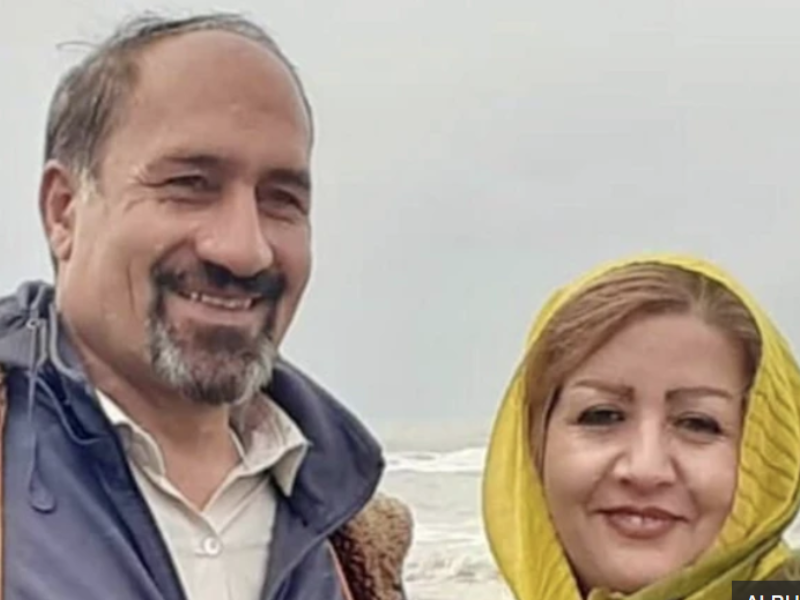
Mohammad and his wife, Maryam Jafari, did not open the door.
Their children, fearing that they might be arrested, went to a neighbor’s house. Mohammad and his wife remained inside.
According to the account presented in the case, one of the officers climbed over the wall into the courtyard and opened the door for five others. Six men entered the property.
They searched the house and the rooftop, looking for Mohammad, but could not find him.
As they were preparing to leave, one of the officers reportedly said that he had seen “a shadow on the rooftop.”
The officers returned upstairs.
Mohammad Jameh-Bozorg was there.
He resisted and demanded that they show him an arrest warrant.
It was a simple question—“Show me the warrant.”
Yet, according to the account of that night, it would become one of the final moments of his life.
The Rooftop — His Final Stand
The six officers from the first group then threatened Mohammad and his wife, telling them that if they contacted the second team, they would kill Mohammad.
They subsequently called for another group.
Six more officers entered the house. According to the case account, they were taller and more physically imposing.
Maryam Jafari was confined upstairs while the officers went to the rooftop.
She was left alone in the house.
The home that had suddenly filled with armed men became a place of fear and uncertainty. Her husband was on the rooftop, surrounded by men who, only moments earlier, had threatened his life.
A few minutes passed.
Then Maryam heard the sound of something being slammed against the ground.
After that came the sound of a gunshot.
She asked the officers what had happened.
The response she received was:
“Nothing happened, but he is feeling a little unwell.”
Maryam took a glass of water for her husband, who, according to the family, was elderly and in poor health.
But an officer stopped her.
He took the glass from her hand and told her:
“Go downstairs.”
She had no choice but to return.
A few minutes later, however, she went back upstairs to check on her husband.
This time, no one was on the rooftop.
Only Mohammad remained.
He was lying on the ground.
The Moment the Truth Became Clear
Maryam Jafari, Mohammad’s wife and the only eyewitness to what happened immediately afterward, later described what she saw.
She placed her hand on her husband’s chest and called his name.
He did not answer.
His body was still warm.
For a moment, Maryam believed that he was alive and that perhaps something could still be done to save him.
Then she saw the back of his head.
It was covered in blood.
And then she saw his face.
He had been shot in the eye.
Subsequent forensic examinations revealed even more devastating details. A shotgun pellet had been fired at his eye from close range, and the pellets had spread into his brain.
According to the forensic physician’s findings, the shot had been fired directly from the front at a distance of approximately one meter.
A firearms expert determined that the nature of the shooting indicated an intention to kill.
On that basis, the principal defendant was charged with intentional murder.
Mohammad Jameh-Bozorg died on September 24, 2022.
He was 59 years old.
His carpet shop remained.
His home remained.
His wife and children remained.
But from that night onward, their lives would never again be the same.
After His Death — The Beginning of a Legal Battle
Mohammad Jameh-Bozorg’s death did not mark the end of the story.
For his family, it marked the beginning of another chapter: a search for the truth and for answers to the questions of what had happened that night and who was responsible for his death.
Payam Derafshan, the Jameh-Bozorg family’s lawyer, announced that the court’s ruling was formally delivered on Wednesday, January 10, to the lawyers in the case and to the deceased’s next of kin.
According to the ruling, the first defendant—the person identified as the shooter and perpetrator of the killing—was sentenced to qisas, or retributive justice in the form of capital punishment.
The second defendant, who had been responsible for field command, and the tenth defendant, identified as the head of the command office, were sentenced to imprisonment.
The third defendant, taking into account his “expression of remorse and good record,” was sentenced to pay a fine.
Another defendant in the case was acquitted.
The case concerning the unit commander was being considered separately by Branch Four of the Tehran Military Court of Appeals.
The family’s lawyer also raised questions about the organization and preparation of the forces involved in the operation, including the commander’s responsibility for recruiting personnel, training them, providing them with weapons, and facilitating a nighttime operation in a citizen’s home without the necessary judicial warrant.
Fourteen Defendants and the Continuing Investigation
During the investigation, the prosecutor of Branch One of the Western Tehran Military Prosecutor’s Office ordered the arrest and charging of 12 of the 14 defendants who were allegedly involved in forcibly entering Mohammad Jameh-Bozorg’s home.
Two other individuals, whose possible direct involvement in the killing had been raised, were not arrested despite the prosecutor’s efforts and were reported to be fugitives.
A case that had begun with a violent night in a home in Malard had now reached the courts.
But for Mohammad’s family, no court ruling and no hearing could alter the simple and painful reality of his absence.
Mohammad Jameh-Bozorg would never return home.
There would be no more mornings beginning at his carpet shop.
No more evenings when he would return home to his wife.
No more voice for his children to hear behind the door.
His life had begun on March 23, 1963.
It ended on September 24, 2022, on the rooftop of his own home, with a shotgun pellet fired into his eye.
Yet for Maryam Jafari and the Jameh-Bozorg family, what happened that night was not merely the end of one man’s life.
It was the beginning of years in which the memory of that house, that rooftop, the sound of a gunshot, and the image of a man whose body was still warm would become an inseparable part of their lives.
Perhaps the most painful part of the story is precisely this:
Mohammad Jameh-Bozorg died in his own home—the place that should have been his family’s sanctuary.
According to the eyewitness account and the reports contained in the case, until his final moments he stood his ground and demanded that those who had entered his home show him an arrest warrant.
That night, the house was no longer a home.
And when morning came, Mohammad was no longer alive.