 پارسی
پارسی
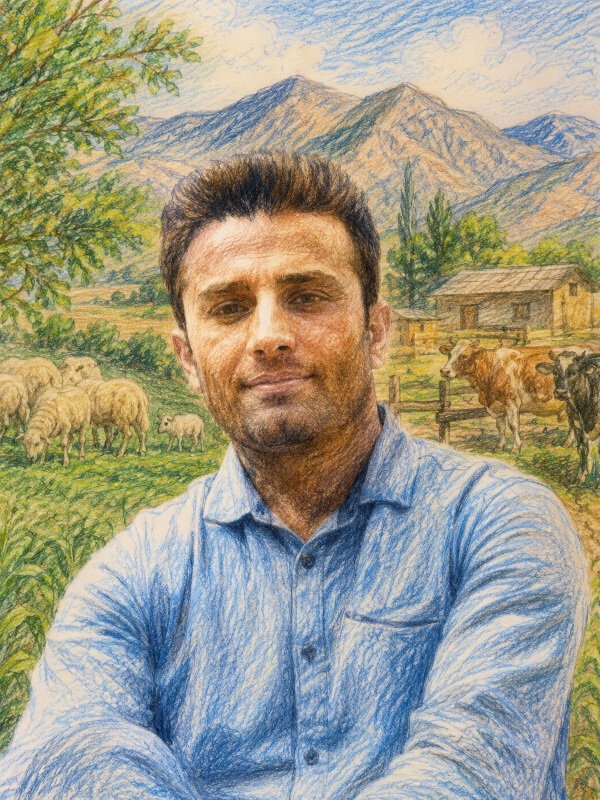
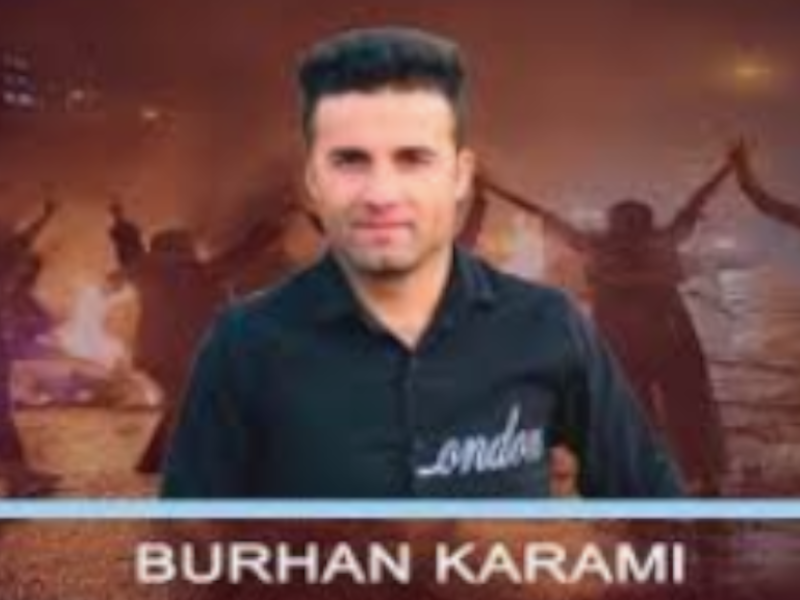
Borhan Karami
Borhan Karami (October 28, 1990 – November 16, 2022)
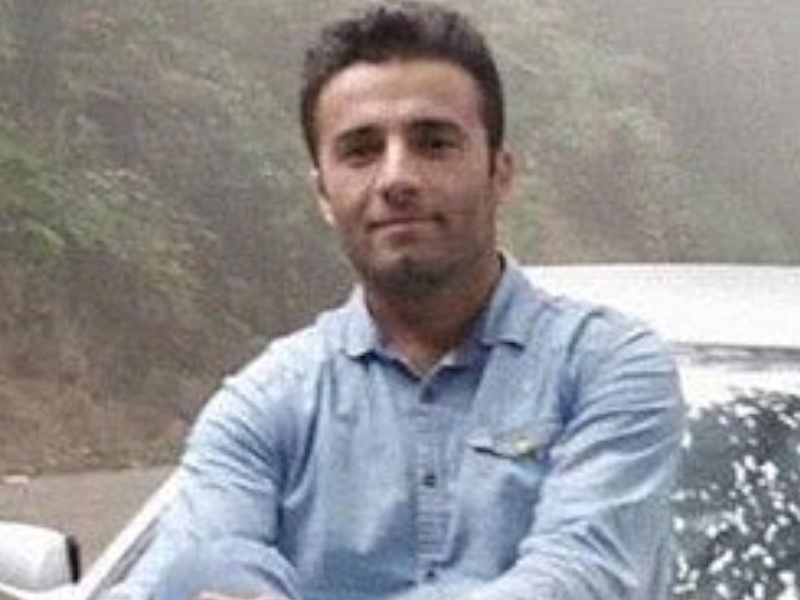
Borhan Karami, son of Mahmoud and Ameneh, was born on October 28, 1990, in the village of Cherousaneh near Kamyaran in Kurdistan Province, Iran, into a Kurdish Sunni family. He spent his childhood and adolescence in the same village, where he completed his secondary education while also helping his family with farming and livestock work. From a young age, he was known as a hardworking and responsible person. After getting married, he moved to the city of Kamyaran in 2016 and worked as a plasterer and construction laborer. He was the father of a young child and lived a modest but dignified life with his family.
Relatives and friends described him as calm, hardworking, sociable, and deeply empathetic toward others. He was sensitive to injustice and inequality and believed in equal rights for women and men. Borhan loved football and mountaineering and frequently spent time in the Shaho Mountains. Although he was not politically active in an organized way, he closely followed social developments and was disturbed by oppression and violence. During the “Woman, Life, Freedom” uprising in 2022, like many people in Kurdistan, he felt connected to the grief and anger spreading across society.
After the death of Jina (Mahsa) Amini in September 2022 and the beginning of nationwide protests, Kurdish cities became major centers of resistance. In November 2022, during calls to commemorate the victims of the November 2019 protests, Kamyaran was also experiencing widespread unrest. On November 15, 2022, protests in the city turned violent after security forces intervened, and another protester, Fouad Mohammadi, was killed by direct gunfire. His death intensified public anger and mourning throughout the city.
On the morning of Wednesday, November 16, 2022, Borhan Karami left home for work as usual. However, due to the general strike and protests taking place that day, he returned home shortly afterward. Around noon, he left again to attend the mourning ceremony for Fouad Mohammadi and to express solidarity with his family. Before leaving, he wrapped a traditional Kurdish scarf around his shoulders — a symbol of identity and solidarity with his people. During phone calls with his wife that day, he said he was attending the ceremony and would soon return home.
A few hours later, however, his family could no longer reach him. Shortly afterward, an unknown person answered his phone and informed the family that Borhan had been injured and transferred to Sina Hospital in Kamyaran. His family rushed to the hospital, only to discover that he had died from the severity of his injuries and that his body had already been taken to the morgue.
Videos published from the moment he was shot show Borhan walking in a relatively quiet street when he was suddenly hit by direct gunfire and collapsed to the ground. Witnesses in the videos can be heard speaking in shock, with one person saying, “They shot someone dead.” According to human rights organizations and relatives, Borhan Karami was killed by live ammunition fired by Iranian security forces.
After his body was transferred to the hospital, security agents reportedly attempted to control the flow of information and pressured the family to hold a quiet burial without public gatherings or protest slogans. Authorities conditioned the release of his body on an immediate burial in his home village. Despite these restrictions, on the evening of November 17, 2022, Borhan Karami was buried in Cherousaneh with the presence of a large crowd of mourners. Participants in the funeral chanted slogans in support of freedom and against state repression despite the heavy security atmosphere.
Pressure on the family continued after the funeral. According to reports, security institutions offered to classify Borhan as a government “martyr” and place his family under the support of the Foundation of Martyrs, an offer the family firmly rejected. His relatives stated that they were proud of Borhan and refused to accept the government’s narrative regarding his death.
During the fortieth-day memorial ceremony, people once again gathered at his grave to honor his memory. His brother, Bahman Karami, publicly denied rumors that the family had sought recognition from the Foundation of Martyrs and emphasized that they had never accepted such proposals. On the anniversary of his death, Borhan’s gravestone was reportedly vandalized by unknown individuals, but his family declared that such acts would not intimidate them and would instead strengthen their determination.
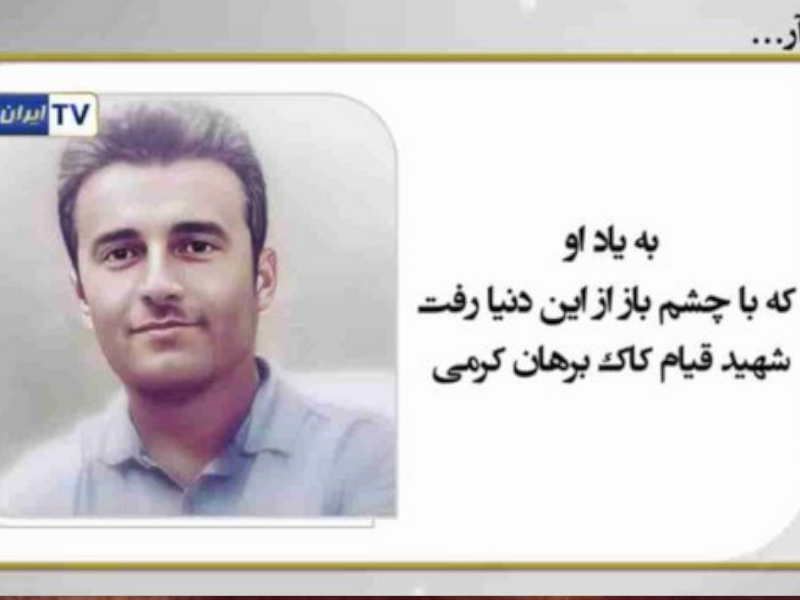
The death of Borhan Karami was not only the loss of a young worker and father; for many people in Kamyaran and Kurdistan, he became a symbol of grief, resistance, and the ongoing demand for justice. His relatives say that people across the region now remember him with deep respect and see his name as part of the collective memory of the 2022 uprising — a young man who was shot and killed in the streets of his city, but whose memory continues to live on among the people.